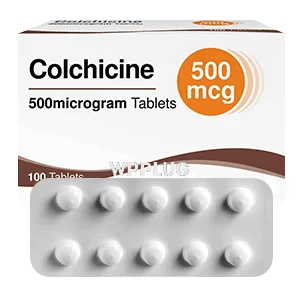
| Product dosage: 0.5mg | |||
|---|---|---|---|
| Package (num) | Per pill | Price | Buy |
| 60 | $0.95 | $57.05 (0%) | 🛒 Add to cart |
| 90 | $0.79 | $85.57 $71.06 (17%) | 🛒 Add to cart |
| 120 | $0.70 | $114.10 $84.07 (26%) | 🛒 Add to cart |
| 180 | $0.62 | $171.15 $112.10 (35%) | 🛒 Add to cart |
| 270 | $0.56 | $256.72 $152.13 (41%) | 🛒 Add to cart |
| 360 | $0.54
Best per pill | $342.29 $193.16 (44%) | 🛒 Add to cart |
Synonyms | |||
More info:
Colchicine: Targeted Anti-Inflammatory Action for Gout and Beyond - Evidence-Based Review
Colchicine is a naturally occurring alkaloid derived primarily from the autumn crocus (Colchicum autumnale) and glory lily (Gloriosa superba). It’s one of the oldest medications still in clinical use today, with references dating back to ancient Egyptian times for treating joint swelling and pain. What’s fascinating is how this ancient remedy has found validated modern applications through rigorous clinical trials. In contemporary practice, colchicine serves as a potent anti-inflammatory agent with a unique mechanism distinct from NSAIDs or corticosteroids, making it particularly valuable for specific inflammatory conditions where other treatments fall short or pose greater risks.
allopurinol
Allopurinol is a xanthine oxidase inhibitor, a medication primarily used to manage chronic hyperuricemia and prevent gout flares and uric acid nephrolithiasis. It’s not a dietary supplement or medical device but a prescription drug that has been a cornerstone in rheumatology and nephrology for decades. The drug works by inhibiting the enzyme responsible for converting hypoxanthine to xanthine and then to uric acid, thereby reducing serum urate levels. Its significance lies in its ability to prevent the long-term complications of hyperuricemia, such as tophaceous gout and uric acid kidney stones, rather than providing immediate relief from acute symptoms.
arcoxia
Arcoxia represents a significant advancement in the COX-2 selective NSAID class, offering targeted pain relief with potentially improved gastrointestinal safety compared to traditional nonsteroidal anti-inflammatory drugs. As etoricoxib, this medication has carved out an important niche in managing various inflammatory conditions while minimizing certain adverse effects associated with non-selective COX inhibition. 1. Introduction: What is Arcoxia? Its Role in Modern Medicine Arcoxia, known generically as etoricoxib, belongs to the selective cyclooxygenase-2 (COX-2) inhibitor class of nonsteroidal anti-inflammatory drugs (NSAIDs).
biaxin
Biaxin, known generically as clarithromycin, is a macrolide antibiotic medication prescribed primarily for bacterial infections. It’s not a dietary supplement or medical device but a prescription pharmaceutical with specific antibacterial properties. This monograph will detail its composition, mechanism, clinical use, and real-world application based on current medical evidence and practice experience. Key Components and Bioavailability of Biaxin Biaxin contains clarithromycin as its active component, typically formulated as tablets, extended-release tablets, or oral suspension.
indocin
Indocin, known generically as indomethacin, is a potent nonsteroidal anti-inflammatory drug (NSAID) that has been a cornerstone in managing inflammatory conditions since its introduction in the 1960s. It’s primarily prescribed for its robust anti-inflammatory, analgesic, and antipyretic properties, targeting conditions like gout, arthritis, and ankylosing spondylitis. Unlike over-the-counter NSAIDs, indocin requires careful medical supervision due to its potency and potential side effects, making it a critical tool in specific clinical scenarios where milder agents prove insufficient.
podowart
Podowart represents a specialized topical solution containing podophyllotoxin as its active ingredient, primarily indicated for the treatment of external genital warts (condylomata acuminata). This cytotoxic agent works through selective destruction of wart tissue while minimizing damage to surrounding healthy skin. The preparation typically comes as a 0.15% w/w podophyllotoxin solution in ethanol, with precise applicators designed for targeted treatment. What makes Podowart particularly valuable in clinical practice is its patient-applied formulation, which allows for home-based treatment under medical supervision, reducing the need for frequent clinic visits while maintaining therapeutic efficacy.
pravachol
Pravastatin sodium, the active pharmaceutical ingredient in Pravachol, represents one of the earliest and most extensively studied HMG-CoA reductase inhibitors in clinical practice. Unlike many newer supplements that make bold claims with limited evidence, this compound has decades of randomized controlled trial data supporting its effects on cardiovascular risk reduction through LDL cholesterol modulation. What’s fascinating about pravastatin specifically is its hydrophilic properties, which create a distinct pharmacokinetic profile compared to lipophilic statins - something that becomes clinically relevant when considering muscle-related side effects and drug interactions.
zyloprim
Zyloprim represents one of those foundational medications that quietly revolutionized management of chronic metabolic conditions. When we first started using it in our rheumatology practice back in the late 90s, it was primarily for gout management, but over the years we’ve discovered nuances that aren’t in the official prescribing information. The development team actually had significant disagreements about the optimal dosing strategy - some argued for aggressive loading doses while others favored the slow titration approach we eventually standardized.
a ret gel
Product Description A ret gel represents a significant advancement in topical retinoid therapy, combining stabilized retinoic acid derivatives with enhanced penetration technology. This medical-grade formulation exists at the intersection of dermatological science and practical patient care, specifically engineered to overcome the traditional limitations of retinoid preparations while maximizing therapeutic outcomes across multiple dermatologic indications. 1. Introduction: What is a ret gel? Its Role in Modern Dermatology When patients ask “what is a ret gel used for,” they’re typically seeking more than just a definition—they want to understand why this specific formulation matters in their treatment journey.