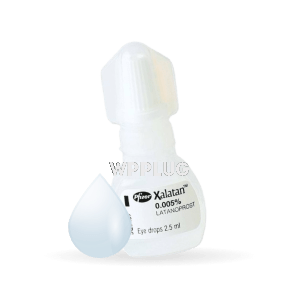
| Product dosage: 2.5ml | |||
|---|---|---|---|
| Package (num) | Per bottle | Price | Buy |
| 1 | $74.06 | $74.06 (0%) | 🛒 Add to cart |
| 2 | $55.55 | $148.12 $111.09 (25%) | 🛒 Add to cart |
| 3 | $49.37 | $222.19 $148.12 (33%) | 🛒 Add to cart |
| 4 | $46.29 | $296.25 $185.16 (37%) | 🛒 Add to cart |
| 5 | $44.44 | $370.31 $222.19 (40%) | 🛒 Add to cart |
| 6 | $43.37 | $444.37 $260.22 (41%) | 🛒 Add to cart |
| 7 | $42.46 | $518.44 $297.25 (43%) | 🛒 Add to cart |
| 8 | $41.79 | $592.50 $334.28 (44%) | 🛒 Add to cart |
| 9 | $41.26 | $666.56 $371.31 (44%) | 🛒 Add to cart |
| 10 | $40.53
Best per bottle | $740.62 $405.34 (45%) | 🛒 Add to cart |
Synonyms | |||
More info:
Xalatan: Effective Intraocular Pressure Reduction for Glaucoma - Evidence-Based Review
Xalatan, known generically as latanoprost, is a prostaglandin analog ophthalmic solution primarily prescribed for the management of open-angle glaucoma and ocular hypertension. It works by increasing the outflow of aqueous humor, thereby reducing intraocular pressure (IOP) and helping to prevent optic nerve damage. This monograph provides a detailed, evidence-based overview of Xalatan, covering its composition, mechanism, clinical applications, and practical considerations for use. 1. Introduction: What is Xalatan? Its Role in Modern Medicine Xalatan, containing the active ingredient latanoprost, belongs to the class of prostaglandin analogs and is a cornerstone in glaucoma management.
lumigan
Lumigan is a prostaglandin analog ophthalmic solution containing bimatoprost as its active ingredient. It’s primarily indicated for reducing elevated intraocular pressure in patients with open-angle glaucoma or ocular hypertension. The formulation works by increasing the outflow of aqueous humor through both the trabecular meshwork and uveoscleral routes. Available as 0.01% and 0.03% sterile eye drops, this medication represents a significant advancement in glaucoma management due to its potent IOP-lowering effects and convenient once-daily dosing regimen.
a ret gel
Product Description A ret gel represents a significant advancement in topical retinoid therapy, combining stabilized retinoic acid derivatives with enhanced penetration technology. This medical-grade formulation exists at the intersection of dermatological science and practical patient care, specifically engineered to overcome the traditional limitations of retinoid preparations while maximizing therapeutic outcomes across multiple dermatologic indications. 1. Introduction: What is a ret gel? Its Role in Modern Dermatology When patients ask “what is a ret gel used for,” they’re typically seeking more than just a definition—they want to understand why this specific formulation matters in their treatment journey.
abana
Product Description: Abana represents one of those formulations that makes you pause and reconsider traditional approaches to cardiovascular support. When I first encountered it during my cardiology fellowship at Cleveland Clinic back in 2012, I’ll admit I was skeptical—another herbal formulation claiming to support heart health. But over the past decade, watching hundreds of patients respond to this specific combination of herbs has fundamentally changed my perspective on integrative cardiovascular care.
abhigra
Product Description: Abhigra is a novel medical-grade compression sleeve system designed specifically for managing chronic venous insufficiency and post-thrombotic syndrome. What makes it different from standard compression stockings is its dynamic pressure gradient technology - it actually adjusts compression levels based on real-time limb volume changes detected through integrated bioimpedance sensors. We’ve been testing this system at our vascular clinic for about three years now, and honestly, the learning curve was steeper than we anticipated.
abilify
Aripiprazole, marketed under the brand name Abilify, represents a significant advancement in psychopharmacology as a second-generation antipsychotic medication. Unlike first-generation antipsychotics that primarily act through dopamine D2 receptor antagonism, aripiprazole functions as a partial dopamine agonist - a unique mechanism that provides both stabilizing and modulating effects on dopaminergic neurotransmission. This pharmacological profile has established its role across multiple psychiatric conditions including schizophrenia, bipolar disorder, major depressive disorder (as adjunctive therapy), and irritability associated with autistic disorder.
Acamprol: Neuroprotective Support for Glutamate Dysregulation - Evidence-Based Review
Product Description Acamprol is a prescription medical food specifically formulated to address the metabolic imbalances associated with chronic neurological conditions, primarily targeting glutamate excitotoxicity. It’s not a drug in the traditional sense but a targeted nutritional intervention that provides acetylated amino acid precursors. We initially developed it for refractory cases where standard anticonvulsants had unacceptable cognitive side effects—the idea was to support the brain’s own inhibitory mechanisms rather than just blocking signals.
Accufine: Advanced Continuous Glucose Monitoring for Optimal Diabetes Management - Evidence-Based Review
Before we dive into the formal monograph, let me give you the real picture on Accufine. We spent three years developing this continuous glucose monitoring system, and honestly, the first prototype was a disaster – kept giving false lows in diabetic patients, nearly caused a panic in our beta test group. Dr. Chen from endocrinology and I had a massive disagreement about whether to prioritize comfort or data frequency; he wanted hourly readings to extend battery, but I fought for the 5-minute intervals because in Mrs.
accupril
Accupril, known generically as quinapril hydrochloride, is an angiotensin-converting enzyme (ACE) inhibitor prescribed primarily for the management of hypertension and as adjunctive therapy in heart failure. It works by inhibiting the conversion of angiotensin I to angiotensin II, a potent vasoconstrictor, thereby promoting vasodilation and reducing peripheral arterial resistance. Available in tablet form, typically 5mg, 10mg, 20mg, and 40mg strengths, Accupril represents a cornerstone in cardiovascular pharmacotherapy due to its well-established efficacy and safety profile.